contact@arkeotopia.org


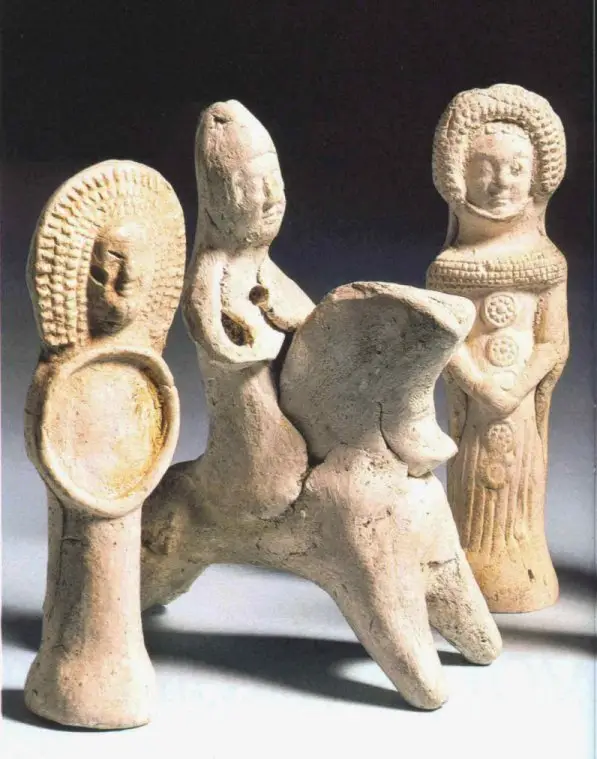
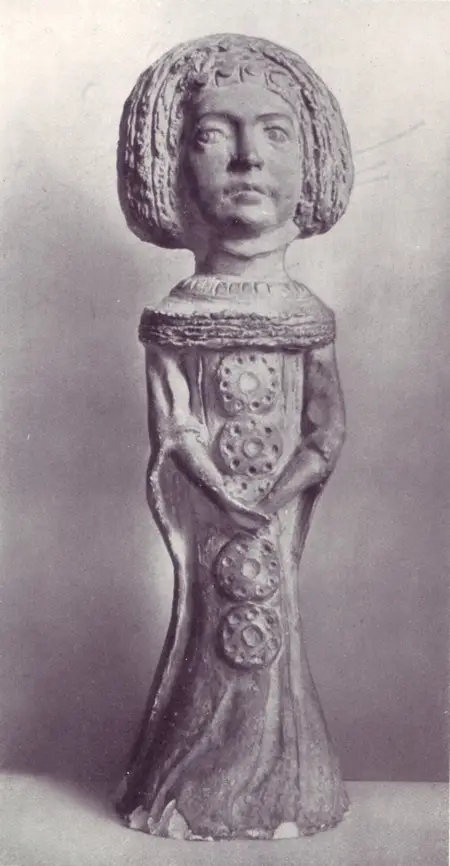
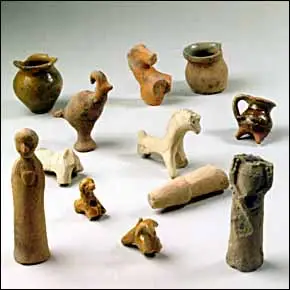
A large majority of toys from this era were made from perishable materials like wood, wax, cloth, or even grass. As such most would have decomposed leaving little evidence for the archaeological record, although some toys did survive. Manuscripts and texts are thus useful to complete what archaeology cannot find anymore, although they mention mainly toys made for the royal classes. The evidence is also more abundant with respect to toys meant for boys. Historians and archaeologists have been able to demonstrate that toys were important during the medieval era, reflecting the relationships between parents and children.
The toys of princes and the high nobility are known from contemporary inventories and were, not surprisingly, of better quality and thus more likely to be well preserved prior to excavation [3]. For those two reasons they are better known. Some display very sophisticated and luxurious craftsmanship, suggesting their destined owners were valued individuals. Most toys for the sons of the rich were related to the art of warfare to prepare them for what was considered to be their main task in adult life. In the 13th century, royal toys included miniature castles, siege engines, and child-sized boats [4]. Sick children could be given toys to pass the time and make them feel better as for Charles VII, future king of France, who fell ill at the age of 2 in 1404 and was given a toy cauldron to play with [5]. Although he was a prince, poorer parents must have behaved similarly with less expensive toys to the extent of their means.
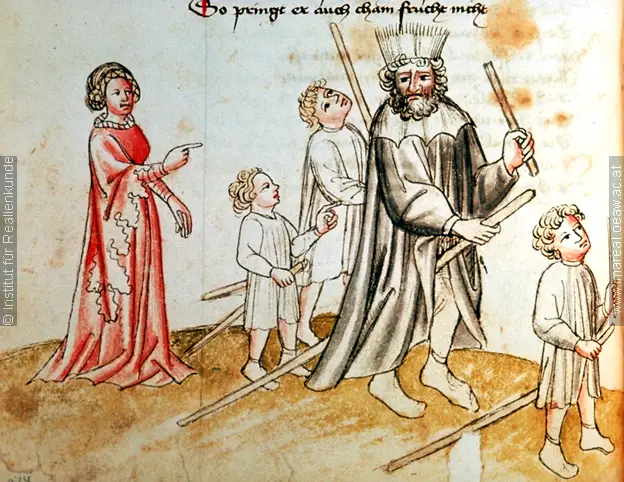
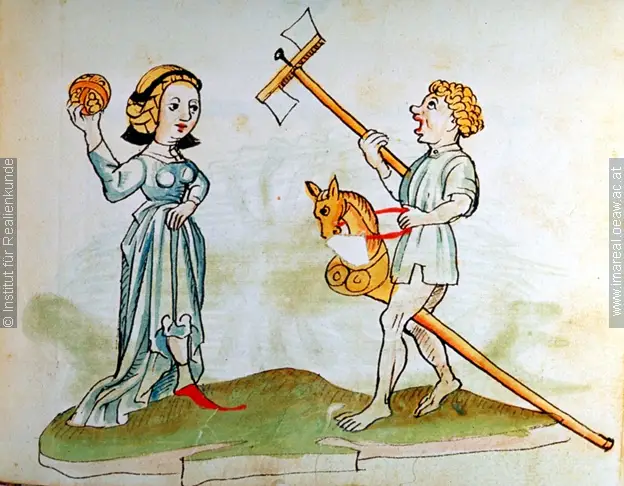
By the 1300s toys for boys were often mass-produced from moulds. They included toy soldiers and other toy animals, the most popular being miniature horses as medieval society was above all equestrian. For example, a lead and tin alloy knight on a horse made from a mould dating to the 14th century was discovered in London [7]. As for votive offerings sold to pilgrims at fairs or pilgrimage sites, such mass-produced toys would have been made and sold by the same merchants or peddlers [8]. In itself this mass-production is indicative of a solvable market necessarily comprised of doting parents or relatives.
Bibliography
- Alexandre-Bidon D., 1997: « La vie en miniature : dinettes et poupées à la fin Du Moyen Âge », Ludica 3.
- Alexandre-Bidon D. et Closson M., 1985: L’enfant à l’ombre des cathédrales, Presses Universitaires de Lyon, Lyon.
- Alexandre-Bidon D. et Lett D., 1997: » Les enfants au Moyen Âge Ve-XVe siècles », Coll. La vie quotidienne, Hachette Litteratures, Paris.
- Colvin H. M. et al., 1963: Brown R. A. and Taylor A. J., The History of the King’s works. Vol. 1, The Middle ages, London.
- Froissart, n.d.: L’Espinette Amoureuse.
- Gauvard Cl., 1991 : « De grace especial : Crime, état et Sociéte en France à la fin du Moyen Âge », vol. 1, Paris.
- Gay V. et Stein H., 1887: Glossaire archéologique du Moyen Âge et de La Renaissance, 2 vol., Librairie de la Société Bibliographique, Nendeln.
- Orme N., 2001: Medieval Children, Yale University Press, New Haven and London.
- Radford U. M., 1949: “The Wax Images Found in Exeter Cathedral”, The Antiquaries Journal 29, p. 162-168.
Notes
1. Alexandre-Bidon D. et Lett D., 1997, pp. 61-62.
2. Orme N., 2001, p. 113.
3. Alexandre-Bidon D. et Closson M., 1985, p. 174.
4. Colvin H.M. et al., 1963, p. 202.
5. Alexandre-Bidon D. et Closson M., 1985, p. 180.
6. Orme N., 2001, p. 175.
7. Ibid., p. 173.
8. Ibid., p.172-174.
9. Alexandre-Bidon D. et Closson M., 1985, p. 180.
10. Froissart, n.d, verses 180 and on.
11. Alexandre-Bidon D., 1997, p.148.
12. Radford U. M., 1949, p. 164-168.
13. Orme N., 2001, p.169.
14. Gay B. et Stein H., 1887, p. 273.
15. Orme N., 2001, p.171.
16. Gauvard Cl., 1991, p.309.
17. Alexandre-Bidon D. et Closson M., 1985, p. 180.