contact@arkeotopia.org

The Early Iron Age around the Arcachon Basin
Summary of the history of research and the phasing of the necropolises of the early Iron Age in the Arcachon Basin


Summary of the history of research and the phasing of the necropolises of the early Iron Age in the Arcachon Basin
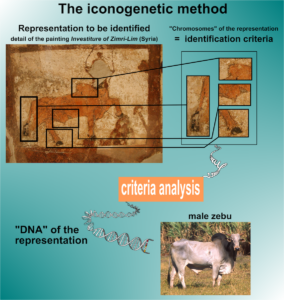
By experimenting with the biological sex and the symbolic sex of animals, our ancestors left for us evidence of their high level of abstraction and their understanding of the world, more complex than we had previously imagined. iconography of the Near East tells us about the complex thinking of Bronze Age Syrians.
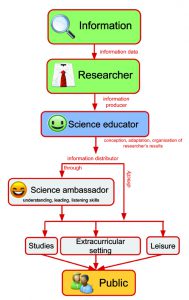
Science and technology are today clearly part of our everyday lives. That is why during the last forty years we have seen the development of the practice of transferring scientific culture from those who produce it, researchers, to those who benefit from it, the general public. So, a new actor appeared who J.-O. Gransard-Desmond present from a new angle with “Bridging the gap between the scientific community and society”.
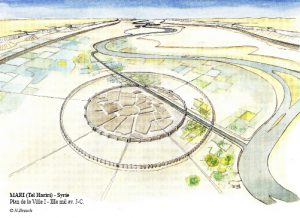
To develop the methodology in archeology, Prof. Margueron conducted an analysis crossing the work of architects and archaeologists. With computer knowledge of Dr. Gransard-Desmond and his intervention at the Red House at Mari site (Syria), a communication resulted from this « From plan to volume: the need for archaeological analysis in 3D modeling » at the Journées d’Informatique et Archéologie de Paris (JIAP) 2010.
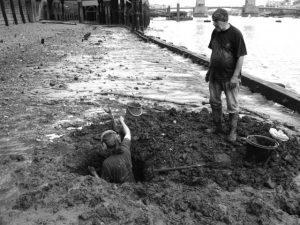
In response to controversies which have been rocking the field of archaeology for several years, ArkéoTopia was asked to contribute to the debate in the review Internet Archaeology with “Can we really differentiate between treasure hunters and non-professional archaeologists?” (Dr. Gransard-Desmond).
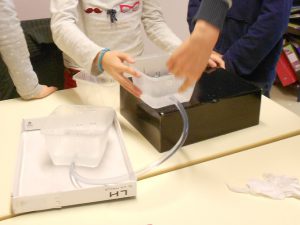
For her master’s thesis in “Professions in teaching, education and training”, Mylène Trouillet, now a schoolteacher, chose the topic of using archaeology to teach science in elementary school.
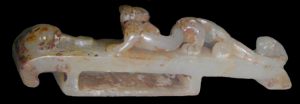
Following the discovering of a complete heavy ormamental set of an equestrian warrior from a rich Thracian necropolis at Chatalka in the Stara Zagora region (Bulgaria), É. Gonthier, R. I. Kostov and E. Strack present “A Han-dated ‘hydra’-type nephrite scabbard slide found in Chatalka (Bulgaria): the earliest and most distant example of Chinese nephrite distribution in Europe”.
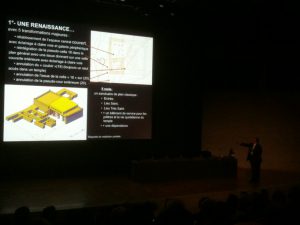
Does archaeological research only consist in digging? Asking this is to risk getting involved in a sensitive subject which always divides the archaeological scientific community, between the old school ones and the ones from mediation theory. On February 22, 2014, Prof. Margueron reopened the debate that led to the article of Dr. Gransard-Desmond: “Is it possible to improve the analysis of an archaeological dig without being the one digging?”.